Life Stages
A Weekly Workout Plan for Women Over 40 You Can Do at Home
By the Reshape 30 Team··8 min read

What to prioritize in your 40s and beyond, plus a sample week of home workouts that balances strength, cardio, mobility, and recovery without any equipment.
What changes after 40, and why it shapes your plan
Your 40s often bring a different set of priorities. Many women notice that recovery takes a little longer, joints feel stiffer in the morning, and the workouts that felt easy at 30 now leave them sore for days. For many, this decade also overlaps with perimenopause, which can affect sleep, energy, and how the body responds to training.
It is also well established that people gradually lose muscle with age if they do not actively work to keep it. That makes strength training one of the most valuable things you can invest in. The good news is that you can build strength at any age, and you do not need heavy barbells or a gym membership to get started.
A good plan for this stage is not about punishing yourself with intensity. It is about consistency, smart progression, and enough recovery to keep coming back.
The four building blocks of your week
A balanced week combines a few different types of training. You do not need to do all of them every day; the goal is to cover each one over the course of the week.
- Strength: 2-3 full-body sessions to build and maintain muscle
- Cardio: brisk walking, low-impact intervals, or dancing for heart health and stamina
- Mobility: short sessions to keep hips, shoulders, and spine moving well
- Recovery: rest days, sleep, and easy movement so your body can adapt
A sample week of home workouts
This schedule assumes 15-25 minutes per session. Swap days around to fit your life; just try to avoid two hard strength days back to back.
Monday, full-body strength: squats, incline push-ups, glute bridges, reverse lunges, and a plank. Do 3 rounds of 10-12 reps each, resting as needed.
Tuesday, brisk walk or low-impact cardio: 20-30 minutes at a pace where you are breathing harder but can still talk.
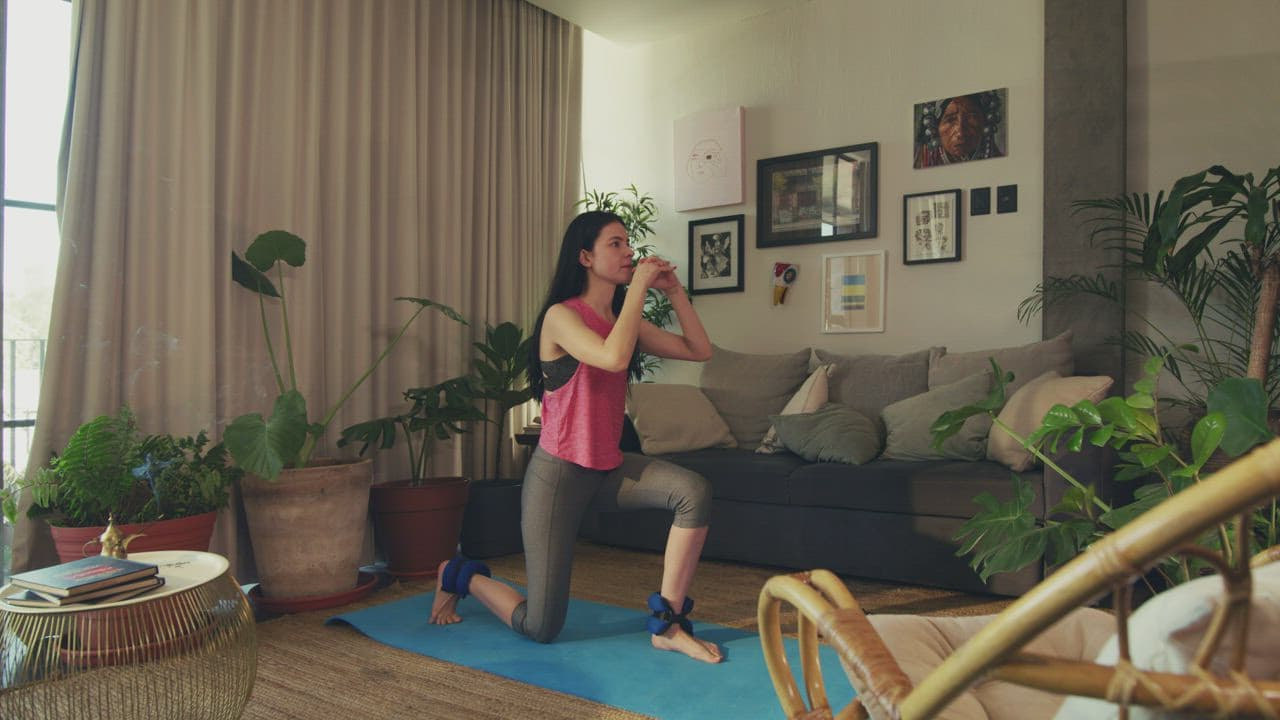
Wednesday, full-body strength: split squats, table rows or towel rows on a door, hip hinges, side planks, and step-ups on a sturdy stair.
Thursday, mobility and core: 15 minutes of gentle flows for hips and spine, plus bird dogs and dead bugs.
Friday, full-body strength: repeat Monday, aiming to add a rep or slow down the lowering phase of each move.
Saturday, active fun: a longer walk, a bike ride, gardening, or dancing in the kitchen.
Sunday, rest: genuine rest, with light stretching if it feels good.
How to progress safely
Progress is what turns a workout into results. Once you can complete all your reps with good form and feel like you have a couple more in the tank, it is time to make things slightly harder. With bodyweight training, you can do that in several ways without adding any weights.
Change only one thing at a time and give yourself a week or two at each step. That way you can tell what is working and avoid the soreness spikes that tend to derail people.
- Add 1-2 reps per set
- Add an extra round
- Slow the lowering phase to three seconds
- Move to a harder variation, like a lower push-up surface or single-leg bridge
- Shorten your rest periods slightly
Look after your joints and recovery
Joint-friendly training does not mean avoiding effort. It means choosing low-impact options when jumping does not feel good, warming up thoroughly, and working through a range of motion you can control. A five-minute warm-up of marching, arm circles, hip circles, and easy squats is worth every second.
Recovery is part of the plan, not a break from it. Prioritize sleep where you can, include protein at each meal to support your muscles, and take an extra rest day when you feel run down. Many women find that adjusting the plan to how they feel on a given day helps them stay consistent over the long run.
Some soreness a day or two after a new workout is common and usually fades as your body adapts. Sharp pain, joint pain that lingers, or pain that changes how you move is different: stop that exercise, choose an easier variation, and get it checked if it does not settle.
- Warm up for five minutes before every strength session
- Swap jumps for steps or marches when impact does not feel good
- Leave at least one day between harder strength sessions
- On low-energy days, do a shorter version instead of skipping entirely
When to get extra guidance
If you have a heart condition, high blood pressure, osteoporosis or low bone density, a recent injury, or symptoms that concern you, talk with your doctor before starting a new routine. A physical therapist or qualified trainer can also help you adapt exercises around specific joints.
Most importantly, remember that starting is the hardest part. A simple plan you do every week will serve you far better than an ambitious one you abandon after ten days.
This article is for general educational purposes and isn't medical advice. Talk to your healthcare provider before starting a new exercise or nutrition program.